.jpg)
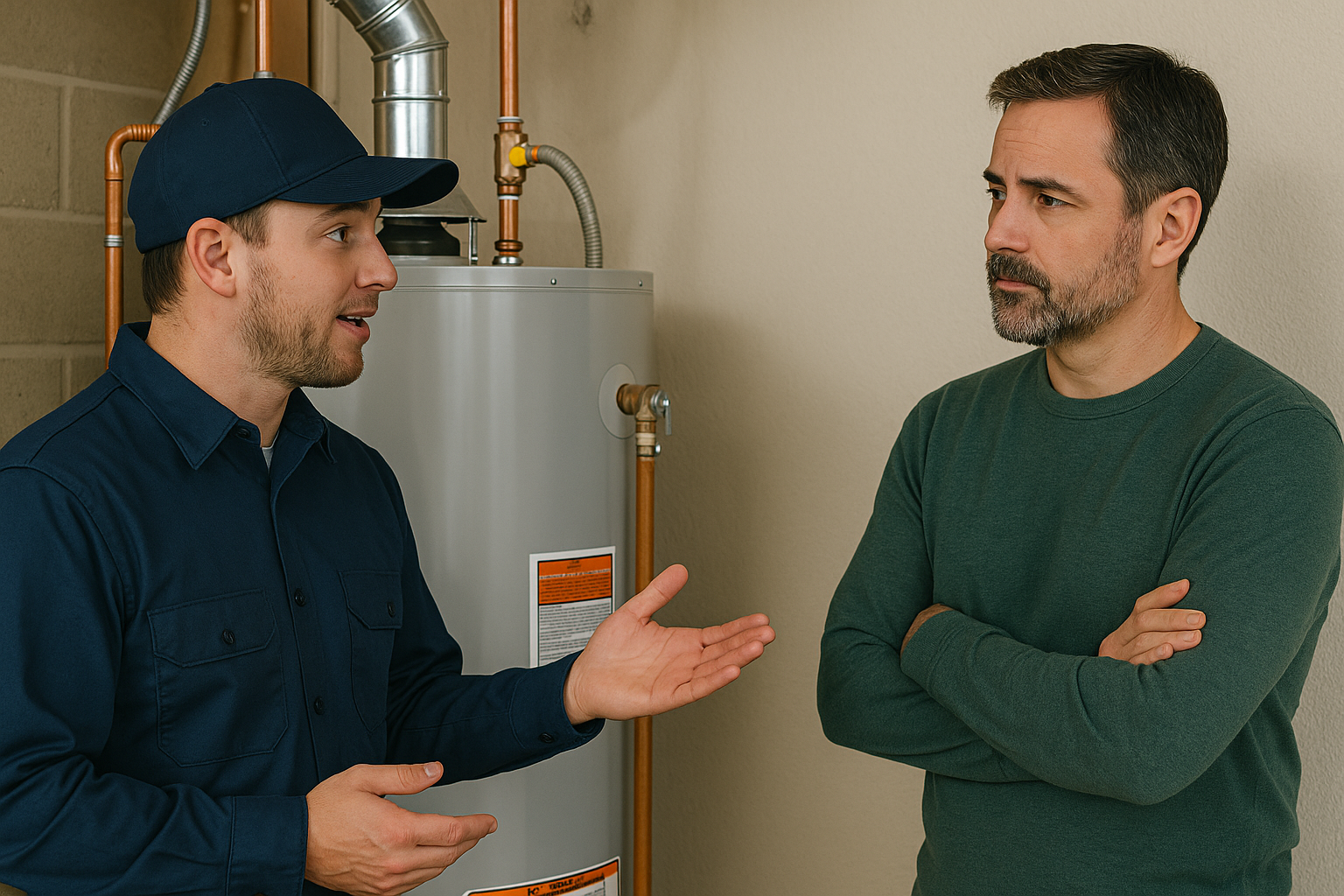

When you show up to a service call, it might look like you’re there to replace a water heater, fix an air conditioner, or unclog a drain. But here’s the truth: homeowners aren’t buying the equipment, the repair, or even your time.
They’re buying peace of mind.
Understanding this is what separates average techs from top-tier sales professionals. When you realize you’re not just selling a part or a unit—but an emotional outcome—you unlock a whole new level of connection with homeowners.
Let’s break this down into plain English.
Homeowners don’t care about BTUs, amperage, or pipe diameter. They care about the way your solution makes their life easier, safer, and more predictable.
At the core, homeowners buy:
That’s it. Every piece of equipment, every repair, every upgrade comes back to those three things.
Imagine a homeowner with a broken AC in August. You might walk in thinking, “They need a new condenser.” But in their mind, they’re thinking, “I need to sleep tonight without sweating through the sheets.”
It’s not about the hardware—it’s about the outcome.
That’s why pros who lead with comfort close more sales. Instead of saying:
“This system is 18 SEER with a 10-year warranty.”
Say this:
“This system will keep your home cool all summer while cutting your electric bill down. You won’t have to worry about breakdowns for at least a decade.”
Same system. Completely different impact.
One of the strongest motivators for any homeowner is fear—especially fear tied to safety.
Think about it: when you tell a homeowner their furnace has a cracked heat exchanger, what they hear is, “Your family could be breathing carbon monoxide.”
When you explain an electrical panel that’s out of code, what they hear is, “There’s a fire risk in your home.”
This isn’t about using fear to pressure homeowners. It’s about responsibly educating them on the risks. Because safety sells itself—when it’s explained clearly.
At the end of the day, the biggest factor in a homeowner’s decision isn’t the system, the warranty, or even the price. It’s you.
Every one of those little details either builds trust or erodes it. And trust is what gets the signature.
Here’s a truth I’ve learned over years of sales in the trades: homeowners would rather pay more to someone they trust than save money with someone they don’t.
Let’s pull this straight from psychology. Maslow’s hierarchy says humans are motivated in levels:
Now translate that into home services:
The higher you can move your homeowner in that hierarchy, the easier the sale.
Here’s a side-by-side example of two techs selling the same water heater.
Wrong Way (features only):
“This is a 50-gallon Bradford White with a 10-year warranty. It’s energy efficient and will get the job done.”
Right Way (outcomes):
“This water heater gives your family plenty of hot water every morning without running out. With the 10-year warranty, you won’t have to worry about it breaking down anytime soon. And it’s designed to save you money on energy bills every single month.”
Which one do you think wins more homeowners?
Alright, so how do you take all this psychology and put it into practice? Here’s a simple three-step framework:
Before you ever recommend a solution, ask the homeowner questions like:
Don’t just talk about the specs. Always connect the feature to the benefit to the emotional outcome.
Example:
Before closing, ask:
These questions don’t pressure—they reassure.
Even seasoned pros sometimes miss the mark when it comes to homeowner psychology. Watch out for these pitfalls:
At the end of the day, service sales isn’t about parts, systems, or even prices. It’s about people.
People buy comfort.
People buy safety.
People buy trust.
If you want to sell more without feeling “salesy,” stop focusing on the equipment and start focusing on the outcome.
The next time you step into a home, ask yourself: Am I selling a product—or am I selling peace of mind?
Because once you understand the psychology behind why homeowners buy, you’ll never look at a service call the same way again.